
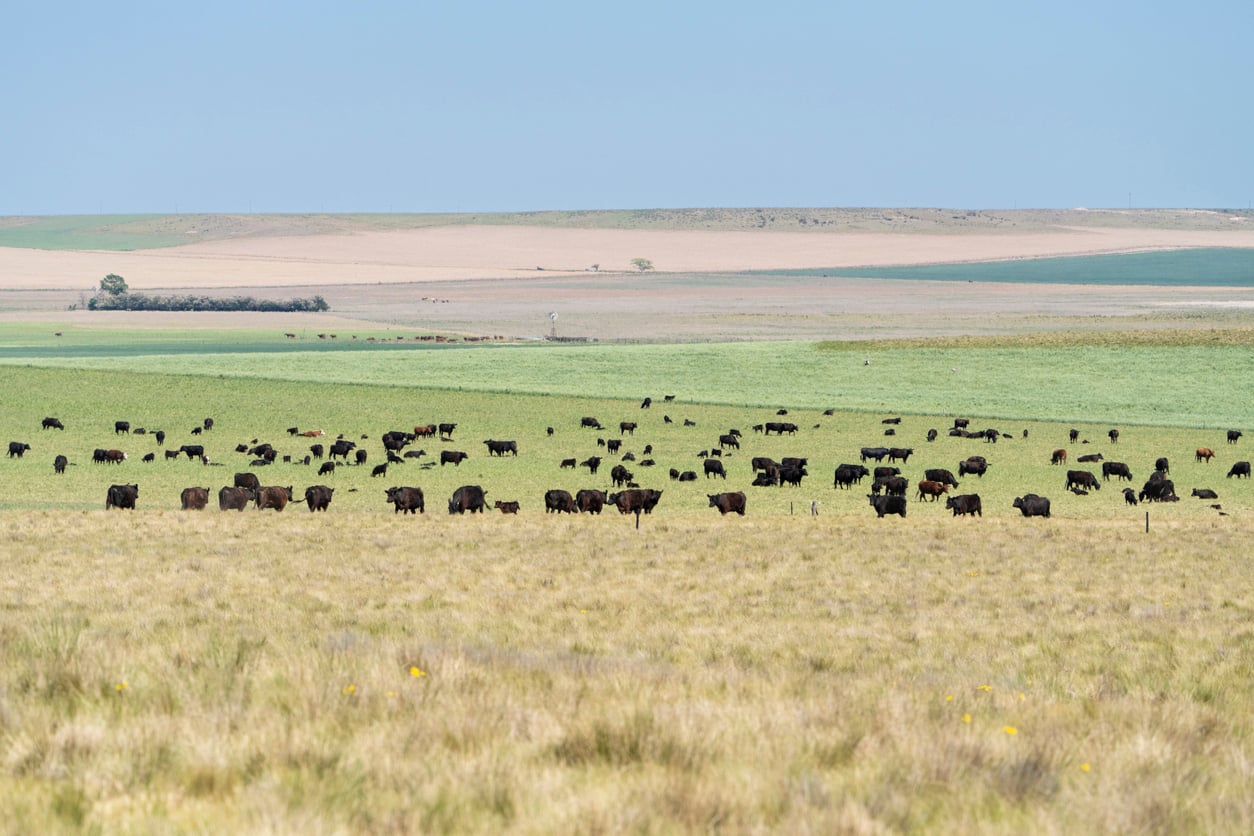


Certain lands lack the necessary conditions to support conventional crop production. Areas where agricultural use is constrained by factors such as poor soil fertility, steep slopes, limited water availability or unfavourable climatic conditions are commonly referred to as marginal lands [1, 3]. The concept, associated with Ricardo's 1817 work on land rent, has since evolved to encompass economic, geographical, ecological and soil suitability criteria [2, 3]. These areas account for around 21% of the world's land surface, although their productive potential varies according to local conditions [1].
For cattle producers, these limitations present both challenges and opportunities. Where crop production is impractical, grazing can provide an alternative use for available vegetation. Making these areas productive requires understanding their limitations and adapting grazing management to available resources.
This article explores how cattle can make productive use of marginal lands and how appropriate grazing strategies can help improve pasture productivity, manage grazing pressure and support the long-term sustainability of these lands.
Prefer to listen to this article? Click the play button below and enjoy our podcast!
How Can Cattle Grazing Improve the Productivity of Marginal Lands?
Cattle can make use of forage resources on marginal lands where soil conditions, topography or climate limit conventional crop cultivation [3]. Through microbial fermentation in the rumen, cattle can digest fibrous plant material, allowing them to utilise forage resources that are not directly suitable for human consumption and thereby contribute to food production [4, 5]. Appropriate grazing management can also contribute to nutrient cycling, maintain vegetation cover and support soil function in marginal lands [6].
Realising this potential depends on adapting grazing practices and managing grazing pressure according to available resources. Forage availability and quality vary with environmental conditions and seasonal changes, making this particularly important on marginal lands [1]. When grazing pressure is not adjusted to forage availability and vegetation recovery, overgrazing can occur, reducing plant cover, slowing regrowth and increasing soil erosion [7]. These effects can be especially damaging where environmental constraints already limit plant growth.
Effective grazing management helps prevent these problems by balancing forage utilisation with vegetation recovery. Assessing forage production, adapting stocking rates to available resources, and allowing sufficient fallow periods for plant recovery are essential for maintaining long-term pasture productivity. Different grazing strategies can help achieve this balance, depending on local conditions and management objectives.

What Are the Best Grazing Strategies for Marginal Lands?
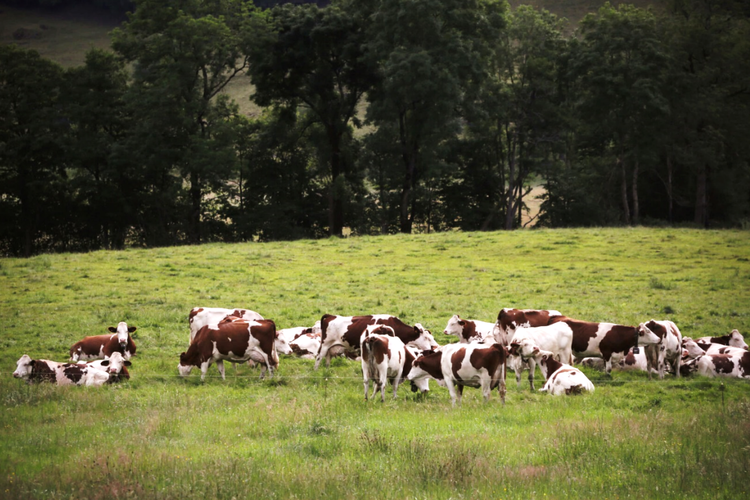
Making productive use of marginal lands requires grazing strategies adapted to local conditions and available resources. Regenerative grazing approaches aim to support long-term pasture productivity and soil health through appropriate grazing management [8]. Different strategies, including rotational grazing, mob grazing and silvopasture, offer distinct ways to manage livestock and pasture resources.
- Rotational grazing involves moving cattle between grazing areas, allowing previously grazed vegetation time to recover. The term encompasses a range of approaches that use different paddock configurations and grazing schedules [6]. By adjusting grazing periods and recovery intervals to forage availability and plant growth, these approaches can help maintain ground cover and increase forage production under suitable management conditions [9].
- Mob grazing involves concentrating a high density of livestock in a relatively small area for a short period before moving them to fresh pasture. This approach aims to manage forage utilisation, distribute manure across the grazing area and allow vegetation time to recover [10].
- Silvopasture integrates trees, pasture and livestock within the same production system. Trees can provide shade and shelter, while suitable species may offer additional forage. This approach can diversify land use and support ecosystem functions where trees can be successfully integrated with grazing areas [11, 12].
The suitability of each approach depends on the climate, soil conditions, vegetation, carrying capacity and resources available to the farmer. Adapting grazing management to these factors is essential to making productive and sustainable use of marginal lands.
Take-Home Message: Making the Most of Marginal Lands
Marginal lands can contribute to cattle production when grazing practices are adapted to their specific constraints and available resources. Making the most of these areas depends on three key principles:
- Making use of available resources: Cattle grazing can turn marginal lands into productive livestock systems by utilising forage resources where conventional crop cultivation is limited.
- Managing grazing pressure: Matching stocking rates to forage availability and allowing sufficient time for vegetation recovery helps maintain pasture productivity and protect soil function.
- Choosing suitable grazing strategies: Rotational grazing, mob grazing and silvopasture offer different ways to manage livestock and vegetation, with their suitability depending on local environmental conditions and management capacity.
Ultimately, making marginal lands productive depends on matching grazing practices to the resources available and the constraints of each site. With appropriate management, cattle grazing can support productive livestock systems while helping maintain the long-term condition of these areas.

References
[1] Ahmadzai, H., Tutundjian, S., Dale, D., Brathwaite, R., Lidderr, P., Selvaraju, R., Malhotra, A., Boerger, V. & Elouafi, I. 2022. Marginal lands: potential for agricultural development, food security and poverty reduction. Rome, FAO.
[2] Ricardo, D., 1817. On the Principles of Political Economy and Taxation. J. M. Dent and Sons, London.
[3] Csikós, N., & Tóth, G. (2023). Concepts of agricultural marginal lands and their utilisation: A review. Agricultural Systems, 204, 103560. https://doi.org/10.1016/j.agsy.2022.103560
[4] Varga, G. A., & Kolver, E. S. (1997). Microbial and animal limitations to fiber digestion and utilization. The Journal of Nutrition, 127(5 Suppl), 819S–823S. https://doi.org/10.1093/jn/127.5.819S
[5] Gerber, P. J., Mottet, A., Opio, C. I., Falcucci, A., & Teillard, F. (2015). Environmental impacts of beef production: Review of challenges and perspectives for durability. Meat Science, 109, 2–12. https://doi.org/10.1016/j.meatsci.2015.05.013
[6] Teague, R., & Kreuter, U. (2020). Managing grazing to restore soil health, ecosystem function, and ecosystem services. Frontiers in Sustainable Food Systems, 4, Article 534187. https://doi.org/10.3389/fsufs.2020.534187
[7] Food and Agriculture Organization of the United Nations. (2003). World agriculture: Towards 2015/2030 — An FAO perspective. FAO.
[8] Morris, C. D. (2021). How biodiversity-friendly is regenerative grazing? Frontiers in Ecology and Evolution, 9, Article 816374. https://doi.org/10.3389/fevo.2021.816374
[9] Jordon, M. W., Willis, K. J., Bürkner, P.-C., & Petrokofsky, G. (2022). Rotational grazing and multispecies herbal leys increase productivity in temperate pastoral systems: A meta-analysis. Agriculture, Ecosystems & Environment, 337, Article 108075. https://doi.org/10.1016/j.agee.2022.108075
[10] Wagner, M., Waterton, C., & Norton, L. R. (2023). Mob grazing: A nature-based solution for British farms producing pasture-fed livestock. Nature-Based Solutions, 3, Article 100054. https://doi.org/10.1016/j.nbsj.2023.100054
[11] Jose, S., & Dollinger, J. (2019). Silvopasture: A sustainable livestock production system. Agroforestry Systems, 93(1), 1–9. https://doi.org/10.1007/s10457-019-00366-8
[12] Jose, S., Kumar, B. M., & Walter, W. D. (2019). Ecological considerations in sustainable silvopasture design and management. Agroforestry Systems, 93(1), 317–331. https://doi.org/10.1007/s10457-016-0065-2

Leave your comments here