
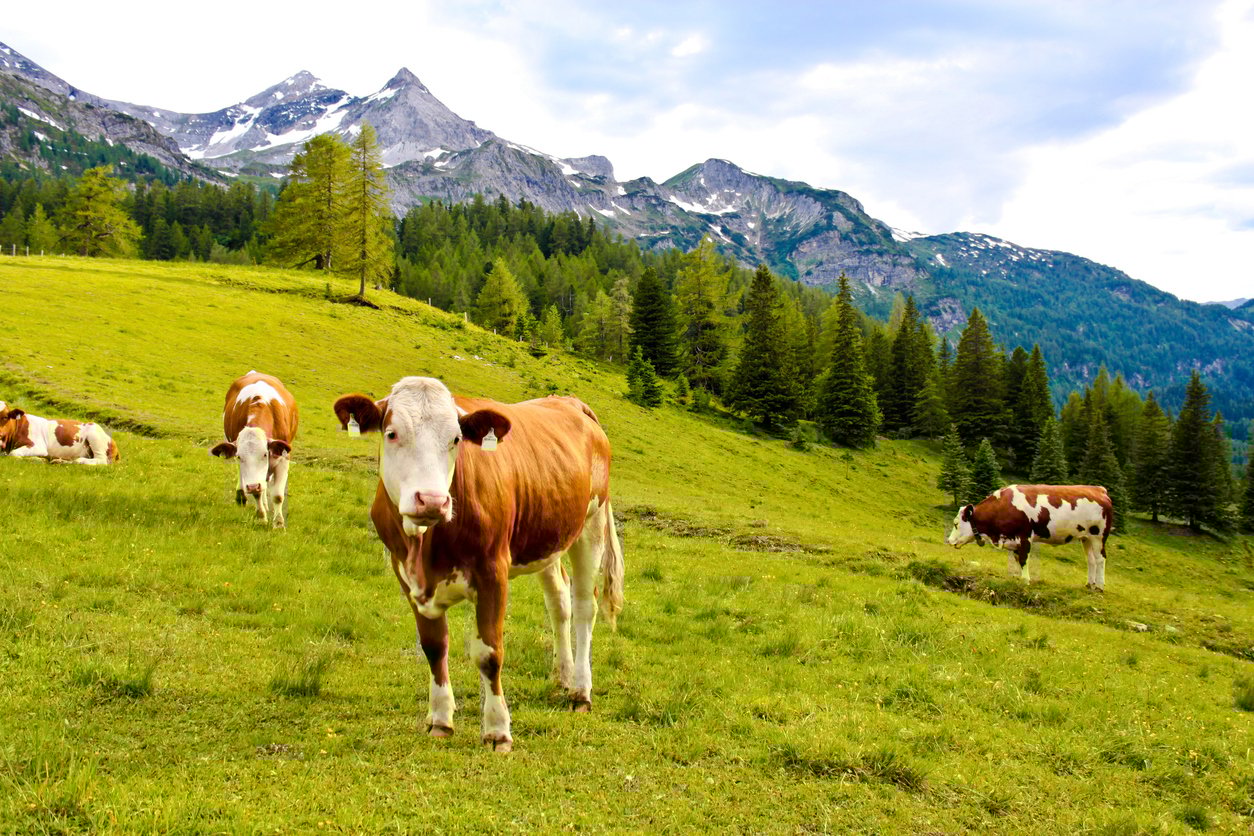


Livestock grazing systems are strategic approaches to managing cattle on pasture. Compared with continuous grazing, this system aims to optimize pasture productivity, improve soil function, and enhance beef cattle performance. Growing environmental and economic pressures on beef production systems have renewed interest in well-managed rotational grazing as a sustainable intensification strategy. In a previous article on the topic, we provide an applied overview of this practice’s agronomic and environmental benefits. Building on that foundation, in this article we will focus on the mechanisms, quantitative planning tools, and performance trade-offs that can determine the success of this practice in beef systems.
Prefer to listen to this article? Click the play button below and enjoy our podcast!
What are the key benefits of rotational livestock grazing?
Improved pasture function: controlled defoliation
Rotational grazing allows forage plants to recover leaf area and rebuild carbohydrate reserves before being grazed again. The core mechanism lies in managing defoliation intensity and recovery time. When residual leaf area is maintained, plants can sustain photosynthetic capacity and rebuild carbohydrate reserves, preserving root growth and stand persistence. In this way, adequate rest periods promote deeper root development, improved stand persistence, and reduced weed invasion. Reviews on intensive and adaptive grazing systems show that managed rest periods can increase pasture resilience and long-term productivity compared with season-long grazing. This is particularly verified when rest periods are matched to plant physiological stage rather than fixed days.
This distinction is critical in beef operations: rotational grazing does not inherently increase productivity unless grazing pressure is calibrated to plant growth rates.
Increased pasture utilization efficiency
Cattle selectively graze preferred species. In this way, under continuous grazing, some areas are overgrazed while others are underutilized. Rotational grazing reduces selective pressure by concentrating animals in smaller paddocks for shorter durations. This improves grazing (or harvest) efficiency and can increase total usable dry matter per hectare. Improved distribution of manure and urine also enhances nutrient cycling within the system.
Beef cattle performance within system constraints
Well-managed rotations provide cattle with access to high-quality vegetative pasture. Studies evaluating grazing systems have reported comparable or improved average daily gain when forage allowance and rotation timing are optimized. By controlling grazing intensity and ensuring adequate residual height, farmers can maintain forage digestibility and crude protein levels that support efficient beef production.
This illustrates a scale distinction:
- Animal-level performance is driven by pasture quality and intake.
- System-level productivity is influenced by stocking rate and pasture persistence.
Enhanced soil health, biodiversity, and water retention
Rotational grazing contributes to improved soil organic matter and drought resilience. Root biomass accumulation and manure redistribution increase soil carbon inputs, while continuous ground cover reduces runoff and erosion.
Biodiversity benefits can include increased plant species richness and improved habitat heterogeneity when rest periods are properly managed. Enhanced soil organic carbon and microbial activity have also been associated with regenerative or adaptive multi-paddock approaches.
What types of rotational livestock grazing systems can producers implement?
Producers can implement basic rotational grazing, intensive systems, strip grazing, adaptive multi-paddock (AMP), or leader–follower systems. The best option depends on infrastructure, stocking rate, and monitoring capacity.
Basic rotational grazing
Involves multiple paddocks and moderate rotation frequency. It improves recovery compared with continuous livestock grazing, but may allow selective grazing if occupation periods are long. It is a good way to transition from continuous to rotational grazing.
Intensive rotational grazing
Characterized by short grazing periods (1–3 days) and higher stocking density, these systems aim to maximize forage control and uniformity. For optimizing intensive grazing, infrastructure reliability and monitoring are determinants of success. When properly managed, this system improves nutrient distribution and pasture uniformity.
Strip grazing
Uses temporary fencing to allocate daily forage strips. Particularly effective during high-growth periods or winter stockpiled forage, maximizing utilization and limiting trampling losses.
Adaptive multi-paddock (AMP) grazing
AMP systems adjust rest intervals based on plant recovery (guided by leaf-stage development) rather than calendar days. Recent studies associate adaptive approaches with improved soil biological indicators and ecosystem services when stocking rate is appropriate.
Leader–follower systems
In this approach, high-nutrient-demand animals (e.g., growing calves, lactating cows) graze first, followed by animals with lower nutritional requirements. This stratified use enhances overall pasture use efficiency and animal performance, improving whole-herd efficiency without compromising pasture control.
How should producers plan a livestock grazing rotation system?
1. Assessing land, forage, and climatic variability
To properly install an effective rotational grazing system, producers need to evaluate and characterize soil type, rainfall distribution, forage species composition, and seasonal growth patterns. These factors are essential. Climate variability strongly influences rotation length and forage growth rates.
Annual dry matter production should be estimated to calculate sustainable stocking rates. Climate variability—especially in semi-arid or Mediterranean environments—may require conservative planning margins.
2. Determining paddock number, size, and rotation length
Rest period length depends on plant growth rate—always look at it from the plant’s perspective. Paddock size should be determined by herd size, target grazing period, and expected forage mass. The goal is to balance grazing pressure and recovery time.
3. Fencing, layout, and water placement
Infrastructure determines grazing uniformity. Permanent perimeter fencing combined with temporary electric subdivisions provides flexibility to adapt according to plant growth and stocking rate. Uneven water distribution leads to localized overgrazing, so water points should ideally be within short walking distance to prevent nutrient concentration and pasture degradation.
4. Stocking rate discipline
Stocking rate is the primary driver of grazing system success. It must align with annual plant production and target residual height. Overestimating carrying capacity leads to pasture degradation regardless of rotation strategy.
What seasonal adjustments are necessary in livestock grazing systems?
Adjust rotation speed to forage growth
During peak spring growth, rotation intervals may be short to prevent forage maturity. Conversely, slower growth in late summer or autumn will require extended rest periods. Adaptive management is critical for system performance.
Modify stocking pressure during drought
Destocking or strategic supplementation may be necessary during drought to protect plant crowns and root systems. Flexibility in stocking decisions is key.
Integrating warm-season and cool-season forages
Combining species with complementary growth curves extends the grazing season. Cool-season grasses dominate spring and autumn, while warm-season species maintain productivity during summer heat.
Winter grazing strategies
Stockpiling forage for winter grazing can reduce feed costs but requires controlled strip allocation to maintain utilization efficiency.
What common mistakes should be avoided in rotational grazing systems?
- Allowing cattle to graze too low – Excessive defoliation reduces regrowth potential and weakens root systems. Maintaining appropriate residual height preserves plant vigor and long-term pasture productivity.
- Not adjusting rotations for weather and forage conditions – Rigid adherence to calendar-based moves undermines the ecological principles of rotational grazing. Weather-driven adjustments are essential.
- Poor water placement leading to uneven grazing – Inadequate water distribution causes patch grazing and nutrient concentration around water points.
- Oversized paddocks with inconsistent forage use – Large paddocks increase selective grazing and reduce the benefits of controlled stocking density. Subdivision is often necessary to achieve uniform pasture use.
Take home messages
Livestock grazing is more than a fencing strategy; it is a dynamic livestock grazing management system that integrates plant physiology, soil processes, and animal nutrition. When properly planned and adaptively managed, rotational grazing can enhance pasture productivity, improve beef cattle performance, and support environmental sustainability.
Scientific literature increasingly demonstrates that success depends less on the label of the system and more on stocking rate control, recovery periods, and continuous monitoring. For beef producers facing climate variability and economic pressure, well-managed rotational grazing offers a resilient and scientifically supported pathway toward sustainable intensification.
References
Frontiers in Sustainable Food Systems. (2020). Adaptive multi-paddock grazing: A regenerative approach to livestock production. Frontiers in Sustainable Food Systems, 4, 534187. https://doi.org/10.3389/fsufs.2020.534187
Gosnell, H., Grimm, K., & Goldstein, B. E. (2020). A half century of Holistic Management: What does the evidence reveal? Frontiers in Sustainable Food Systems, 4, 534187. https://doi.org/10.3389/fsufs.2020.534187
Journal of Soil and Water Conservation. (2021). Grazing management effects on soil health and ecosystem services. Journal of Soil and Water Conservation, 76(3), 59A–66A. https://doi.org/10.2489/jswc.2021.00159
Machmuller, M. B., Kramer, M. G., Cyle, K. T., Hill, N., Hancock, D., & Thompson, A. (2015). Emerging land use practices rapidly increase soil organic matter. Nature Communications, 6, 6995. https://doi.org/10.1038/ncomms7995
Teague, W. R., Apfelbaum, S., Lal, R., et al. (2016). The role of ruminants in reducing agriculture’s carbon footprint in North America. Journal of Soil and Water Conservation, 71(2), 156–164. https://doi.org/10.2489/jswc.71.2.156
Wang, T., Teague, W. R., Park, S. C., & Bevers, S. (2015). GHG mitigation potential of different grazing strategies in the United States Southern Great Plains. Agricultural Systems, 133, 167–176. https://doi.org/10.1016/j.agsy.2014.11.006
Wang, X., Chen, Y., & Li, J. (2024). Environmental impacts and sustainability performance of rotational grazing systems. Environmental Impact Assessment Review, 105, 107394. https://doi.org/10.1016/j.eiar.2024.107394
Yáñez-Ruiz, D. R., Bannink, A., Dijkstra, J., et al. (2018). Designing strategies for methane mitigation in grazing systems. Animal Feed Science and Technology, 243, 41–52. https://doi.org/10.1016/j.anifeedsci.2018.06.002
Zhang, R., Wang, Z., & Li, F. (2023). Effects of grazing systems on animal performance and welfare indicators in beef cattle. Animals, 13(6), 1020. https://doi.org/10.3390/ani13061020
Optimizing intensive grazing: A comprehensive review of rotational grassland management, innovative grazing strategies and infrastructural requirements. (2024). Retrieved from ResearchGate: https://www.researchgate.net/publication/389419203
Canadian Journal of Animal Science. (2025). Grazing management effects on beef cattle productivity and pasture utilization. Canadian Journal of Animal Science. Advance online publication. https://doi.org/10.1139/cjas-2025-0010

Leave your comments here