


Introduction
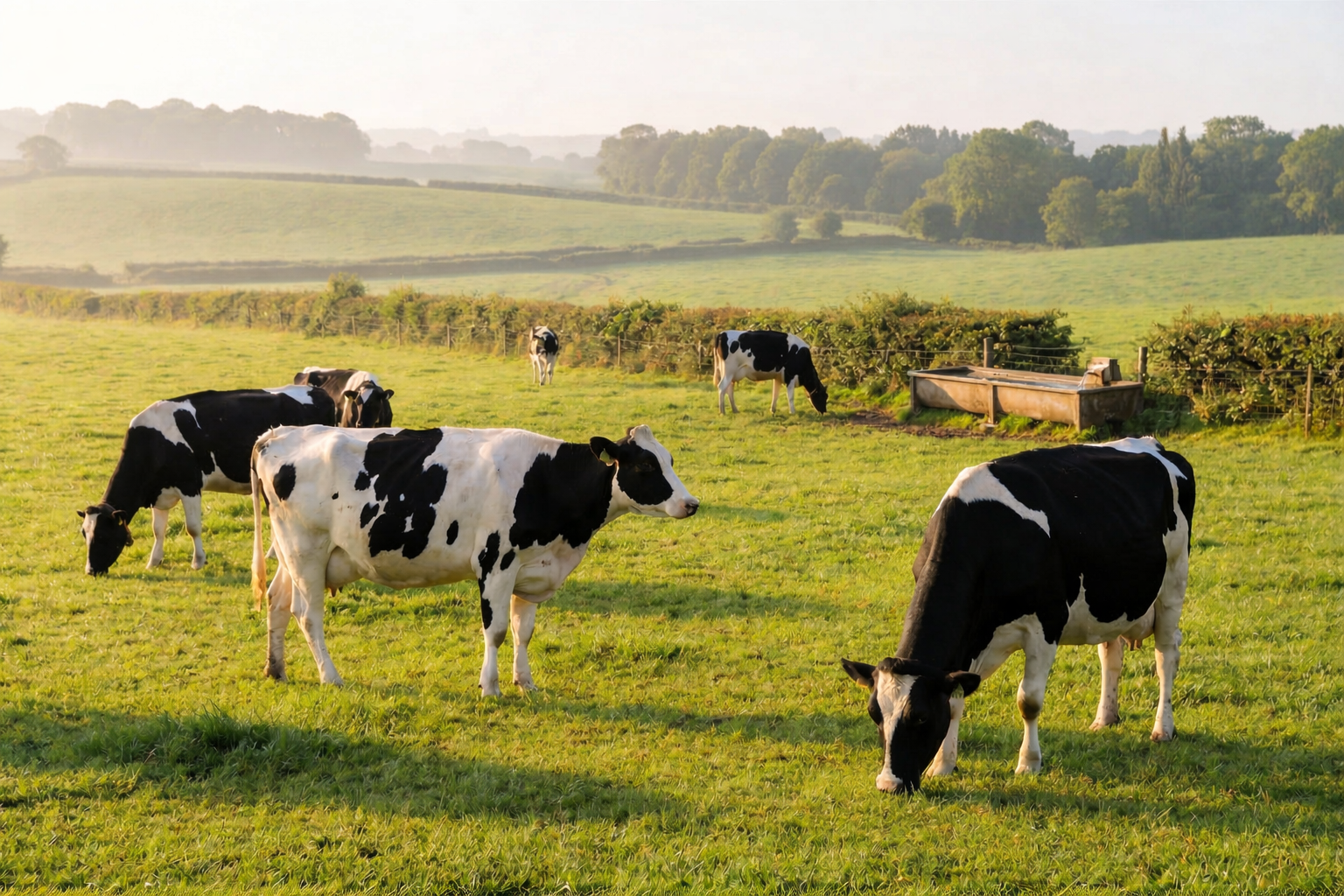
Pasture-based livestock systems depend on the alignment of grazing management with the biological cycles of forage plants. Grasslands are highly responsive to seasonal changes in temperature, rainfall, soil fertility, and grazing pressure. Because of this, proper pasture management cannot rely only on occasional interventions, but rather requires a structured approach throughout the year.
A pasture management calendar helps livestock farmers organize key tasks—such as fertilization, grazing rotation, pasture renovation, and forage conservation—so that they occur at the most effective time, maximizing pasture efficiency and livestock growth. By coordinating farm activities with seasonal pasture growth patterns, farmers can improve forage productivity, maintain pasture resilience, and help ensure a stable feed supply for livestock.
Well-managed grazing systems also provide broader ecological benefits. Research in grazing ecology has shown that properly timed grazing improves forage utilization, supports soil structure, enhances biodiversity, and increases the overall sustainability of pasture-based livestock systems. A seasonal management calendar provides a practical framework for implementing these practices consistently.
Prefer to listen to this article? Click the play button below and enjoy our podcast!
Why is a pasture management calendar important for livestock farmers?
Pasture is often the most economical feed source available to livestock farmers, but its productivity depends heavily on proper timing of management actions. A pasture management calendar helps ensure that essential tasks are completed when plants are biologically able to respond most effectively.
One major benefit of a seasonal management plan is that it ensures timely completion of pasture tasks throughout the year. Activities such as fertilization, reseeding, and weed control have optimal windows depending on the conditions. Performing them too early or too late can reduce their effectiveness and limit pasture growth.
A structured calendar also aids in the prevention of overgrazing and maintenance of long-term forage productivity. Overgrazing occurs when animals remain on the same pasture for too long, removing too much leaf area from plants. This weakens root systems and slows regrowth. Rotational grazing systems—where livestock move between paddocks—allow pastures time to recover and maintain healthy growth.
Another advantage is that it helps balance livestock needs with pasture growth cycles. Forage growth is rarely constant. It typically peaks during spring and early summer and slows during winter or drought periods. A pasture calendar allows producers to adjust stocking rates, grazing rotations, and forage conservation strategies according to annual changes.
Finally, seasonal planning supports better management of feeding, grazing, and soil health. Farmers can coordinate fertilizer applications, pasture renovation, and hay production with grazing schedules, improving both pasture productivity and overall farm efficiency.
What should producers focus on during winter months (December–February)?
Winter is typically the period of slowest pasture growth in temperate areas. Although grazing activity may be limited, winter is a crucial time for planning and preparing for the upcoming season. One important winter task is conducting soil tests and planning fertility applications. Soil testing provides information about nutrient availability and pH levels, helping farmers determine whether lime or fertilizers will be required in the coming spring. Correcting soil fertility before the growing season allows pastures to respond quickly when temperatures increase.
Farm infrastructure should also receive attention. Winter is an ideal time for inspecting and repairing fences and water systems that may have been damaged during the grazing season. Reliable fencing and water access are essential for effective rotational grazing systems. Farmers should also order seeds and fertilizers ahead of spring demand. Agricultural suppliers often experience high demand in early spring, so securing inputs in advance helps avoid delays in pasture establishment or renovation.
Feeding management remains important during this season. Livestock may rely on stored feed, making it necessary to manage winter stockpiled hay feeding carefully to minimize waste.
Finally, winter is a practical time for preparing equipment for spring seeding and pasture work. Servicing seed drills, fertilizer spreaders, and mowing equipment ensures that machinery will be ready once pasture growth season begins.
What key tasks are essential in early spring (March–April)?
Early spring marks the beginning of active pasture growth. As temperatures rise and soil moisture increases, plants begin producing new leaves, making this a critical period for pasture management.
One key activity is overseeding or establishing new forage stands. Overseeding can repair damaged pastures, improve species diversity, and increase forage productivity. Introducing legumes during this process may also enhance nitrogen availability and improve overall forage quality.
Another priority involves applying lime or fertilizer as needed based on soil test results. Correcting soil pH and nutrient deficiencies during early spring helps support vigorous plant growth throughout the grazing season.
Controlling early-emerging weeds is also important. Many weed species establish quickly during spring and compete with desirable forage plants for nutrients and sunlight. Early intervention can prevent these weeds from spreading and dominating the pasture.
Livestock management also begins to shift during this period. As pasture growth accelerates, farmers may need to adjust stocking rates, gradually reintroducing animals to pasture while ensuring grazing pressure remains appropriate.
What should producers manage during late spring and early summer (May–June)?
Late spring and early summer usually represent the peak period of pasture growth in temperate areas. Favorable temperatures and adequate rainfall allow forage plants to grow rapidly, providing abundant feed for grazing animals.
During this stage, farmers should begin rotational grazing to prevent overuse of rapidly growing pastures. Dividing pastures into multiple paddocks allows livestock to graze one area while other paddocks recover, promoting sustainable forage production. Moving livestock will depend on pasture growth rates and livestock density; there is no one-size-fits-all approach. Monitoring pasture conditions is essential. Farmers should monitor pasture height and forage availability to ensure that grazing occurs at appropriate stages of plant growth. Maintaining optimal grazing heights helps plants retain sufficient leaf area for photosynthesis and regrowth.
Because forage production may exceed livestock consumption during this time, farmers often manage peak forage growth for hay or silage. Harvesting excess forage not only prevents waste but also creates feed reserves for periods when pasture growth slows. Again, these decisions will depend on forage growth and stocking density.
In highly productive systems, farmers may also consider applying nitrogen or other fertility boosts if needed to sustain pasture productivity, provided these applications align with environmental and soil fertility considerations.
What priorities shift during mid to late summer (July–August)?
During mid to late summer, pasture growth often slows due to heat and limited rainfall. This period requires careful monitoring to prevent pasture degradation, which can happen very rapidly.
Farmers should begin by watching for drought stress and adjusting stocking pressure. When forage availability declines, it may be necessary to reduce stocking density or extend grazing rotations to prevent overgrazing.
In regions where irrigation is available, farmers may consider irrigating pastures where possible to maintain productivity. However, irrigation should be managed efficiently to conserve water resources.
Summer is also an important time for managing weeds that appear during hot months. Certain weed species thrive under warm conditions and can quickly spread if left unchecked.
Finally, this season provides an opportunity for forward planning for fall forage establishment, selecting seed mixtures and preparing fields for autumn reseeding.
How should producers prepare pastures in the fall (September–November)?
Autumn is a key period for restoring pasture reserves and preparing fields for the next grazing cycle.
One important activity is overseeding cool-season forages where appropriate. Establishing these species during fall allows them to develop strong root systems before winter dormancy, improving productivity in the following year. Fertilizing to support fall growth may be considered, particularly if soil tests indicate nutrient deficiencies. Autumn fertilization can encourage root development and improve plant vigor before winter.
Grazing management must also be adjusted during this season: grazing pressure should be reduced to build root reserves, allowing plants to store carbohydrates in their root systems. These reserves are essential for winter survival and early spring regrowth.
Additionally, protecting wet or vulnerable areas from livestock traffic is something to watch out for. Restricting access to these areas helps prevent soil compaction and erosion, maintaining long-term pasture health.
What seasonal pasture tasks should be included in a yearly plan?
An effective pasture management calendar integrates seasonal tasks into a coordinated annual strategy.
During spring, management typically focuses on seeding new pastures, controlling weeds, and applying fertilizers to stimulate growth.
In summer, the emphasis shifts to grazing management, irrigation where necessary, and monitoring pasture condition to prevent overgrazing or drought damage.
During fall, prioritize overseeding, fertilization, and forage conservation to prepare pastures for winter and the following grazing season.
Finally, winter is largely devoted to maintenance, planning, soil testing, and resource assessment, ensuring that the farm is ready for the next production cycle.
By integrating these seasonal tasks into a yearly plan, farmers can better synchronize grazing management with natural pasture growth cycles. This approach helps maintain productive pastures, supports animal nutrition, and contributes to the long-term sustainability of pasture-based livestock systems.
Key Take-Home Messages
- Pasture management is seasonal, not reactive. Successful grazing systems depend on aligning farm activities—such as fertilization, grazing rotations, and reseeding—with the natural growth cycles of forage plants throughout the year.
- Preventing overgrazing is essential for long-term pasture productivity. Rotational grazing and adequate rest periods allow forage plants to recover, maintain root reserves, and sustain productive pastures over time.
- Pasture growth varies strongly across seasons. Rapid growth typically occurs in spring and early summer, while winter dormancy and summer drought can limit forage availability. Management decisions must adapt to these seasonal changes.
- Planning ahead improves both pasture performance and farm efficiency. Activities such as soil testing, input purchasing, equipment maintenance, and pasture renovation are most effective when scheduled in advance using a yearly management calendar.
- Monitoring pasture condition is as important as grazing livestock. Regularly observing pasture height, forage availability, and plant recovery helps farmers adjust stocking rates and grazing rotations to maintain healthy, productive grasslands.
References
Allen, V. G., Batello, C., Berretta, E. J., Hodgson, J., Kothmann, M., Li, X., McIvor, J., Milne, J., Morris, C., Peeters, A., & Sanderson, M. (2011). An international terminology for grazing lands and grazing animals. Grass and Forage Science, 66(1), 2–28. https://doi.org/10.1111/j.1365-2494.2010.00780.x
Briske, D. D., Derner, J. D., Brown, J. R., Fuhlendorf, S. D., Teague, W. R., Havstad, K. M., Gillen, R. L., Ash, A. J., & Willms, W. D. (2011). Origin, Persistence, and Resolution of the Rotational Grazing Debate: Integrating Human Dimensions Into Rangeland Research. Rangeland Ecology & Management, Volume 64, Issue 4, Pages 325-334 https://doi.org/10.2111/REM-D-10-00084.1
Conant, R. T., Paustian, K., & Elliott, E. T. (2001). Grassland management and conversion into grassland: Effects on soil carbon. Ecological Applications, 11(2), 343–355. https://doi.org/10.1890/1051-0761(2001)011[0343:GMACIG]2.0.CO;2
Franzluebbers, A. J., Sawchik, J., & Taboada, M. A. (2014). Agronomic and environmental impacts of pasture–crop rotations in temperate North and South America. Agriculture, Ecosystems & Environment, 190, 18–26. https://doi.org/10.1016/j.agee.2013.09.017
Hodgson, J. (1990). Grazing management: Science into practice. Longman Scientific & Technical.
Rouquette,F.M., Sollenberger,L., Vendramini, J.M. (2023). Grazing management and stocking strategy decisions for pasture-based beef systems: experimental confirmation vs. testimonials and perceptions, Translational Animal Science, Volume 7, Issue 1, 2023, txad069, https://doi.org/10.1093/tas/txad069
Sollenberger, L. E., Moore, J. E., Allen, V. G., & Pedreira, C. G. S. (2005). Reporting forage allowance in grazing experiments. Crop Science, 45(3), 896–900. https://doi.org/10.2135/cropsci2004.0216
Teague, W. R., Dowhower, S. L., Baker, S. A., Haile, N., DeLaune, P. B., & Conover, D. M. (2011). Grazing management impacts on vegetation, soil biota and soil chemical, physical and hydrological properties in tallgrass prairie. Agriculture, Ecosystems & Environment, 141(3–4), 310–322. https://doi.org/10.1016/j.agee.2011.03.009
Teague, W. R., Provenza, F., Kreuter, U., Steffens, T., & Barnes, M. (2013). Multi-paddock grazing on rangelands: Why the perceptual dichotomy between research results and rancher experience? Journal of Environmental Management, 128, 699–717. https://doi.org/10.1016/j.jenvman.2013.05.064

Leave your comments here