
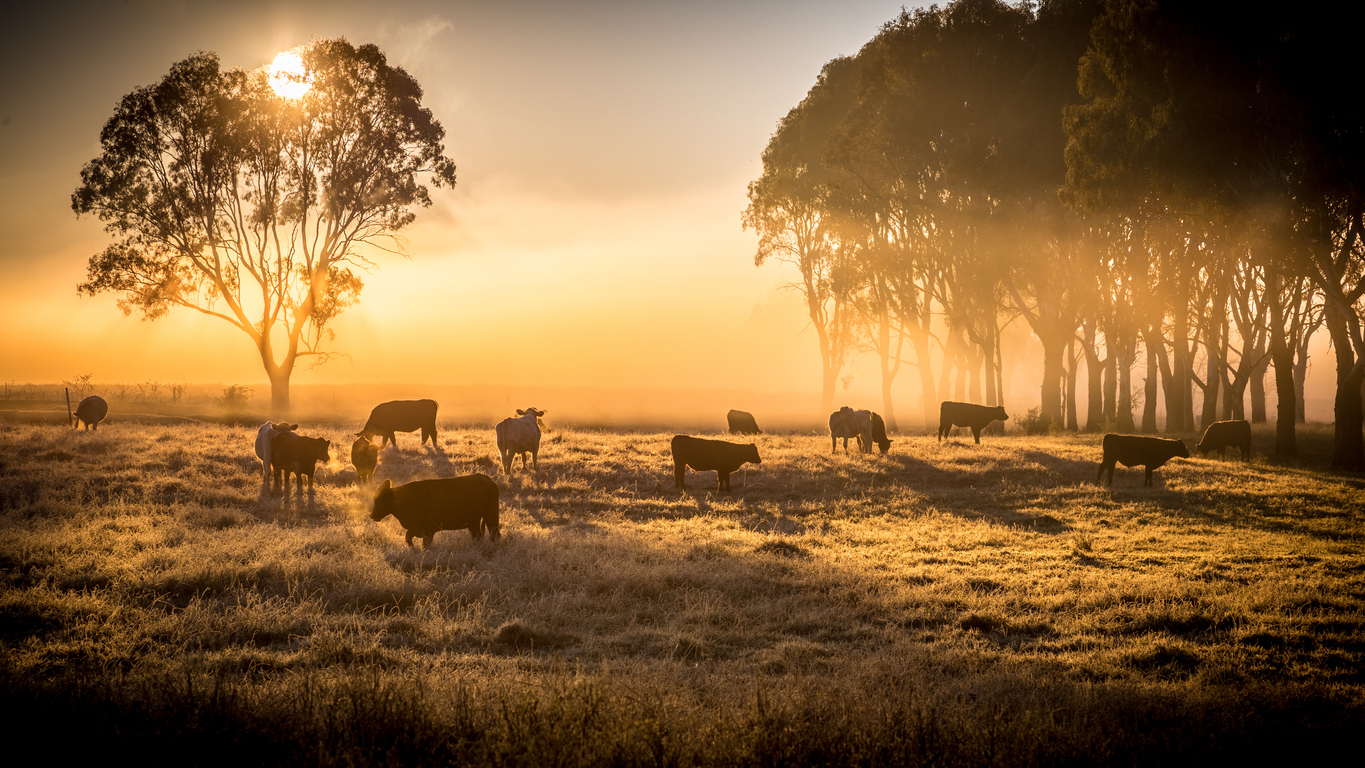


When temperatures climb, shade for cattle becomes a critical part of heat-stress prevention in pasture-based herds, where animals face different risks than in housed systems. On pasture, especially with extreme heat events due to climate change, variables multiply and early signs of heat stress can go unnoticed until production or welfare is already compromised. Focus should be given to four practical pillars: recognising behavioural warning signs, understanding herd and pasture characteristics, ensuring adequate water access and thermal relief, and using technology to anticipate and manage heat stress.
Prefer to listen to this article? Click the play button below and enjoy our podcast!
How can cattle behaviour reveal early signs of heat stress?
Heat stress typically becomes visible in cattle behaviour before it is reflected in production data. As the Temperature–Humidity Index (THI) rises above critical thresholds, animals progressively adjust their grazing behaviour to reduce heat load. Common responses include clustering in shaded areas, standing instead of lying, orienting their bodies toward the wind and reducing grazing activity during the hottest hours of the day.
Clear indicators can be used as early warning signals:
- Increased respiration rate
- Open-mouth breathing with visible abdominal effort and excessive salivation in more advanced stress
- Reduced grazing time and feed intake during peak heat periods
- Preference for shade and high-density grouping in limited cool areas
- Standing posture for prolonged periods instead of lying down
- Restlessness and repeated repositioning
But, not all animals respond to heat stress in the same way. Breed characteristics (1) and physiological status significantly influence heat tolerance and behavioural adaptations.
- Heat-tolerant breeds like Gyr, Brahman and Girolando, maintain grazing activity for longer periods and recover more quickly from thermal stress.
- Dark-coated animals absorb more solar radiation and may show signs of heat stress earlier than light-coloured animals.
- High-producing dairy animals generate substantial metabolic heat and are often among the most vulnerable groups during hot weather.
- Animals in late gestation or early lactation have increased nutritional and physiological demands, making them particularly sensitive to elevated temperatures and humidity.
Why is water access essential for cooling cattle on pasture?
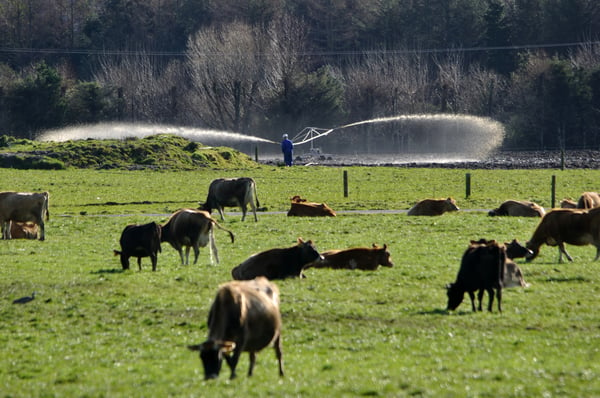
Water is not only a nutritional requirement under heat stress, but also one of the most effective physiological cooling mechanisms available to grazing animals (2). During heat events, water intake can double or even triple. Any constraint in supply at peak demand quickly becomes a welfare and productivity bottleneck, especially for pasture-based herds. To maintain effective thermoregulation, three main parameters are needed:
- Flow rate and recharge capacity: troughs must refill fast enough to support simultaneous drinking events.
- Access capacity and proximity: a minimum of 10 cm of linear trough space per animal, with sufficient distribution points to avoid long walks (< 250 m) (3)
- Water quality: to prevent algal growth and contamination.
What is the best way to provide shade for cattle on pasture?
Shade provision on pasture is both a structural and agronomic challenge. Natural shade from trees remains the most used solution, especially since broad-canopy species provide relief, reduce soil temperatures and offer wind shelter. But temporary shade structures, such as shade cloth over portable frames, are a cost-effective intervention when lacking mature tree cover or in rotational grazing. Strategic placement is essential. A single cluster of trees positioned in the centre of a large paddock tends to accumulate nutrients and concentrate soil compaction in one area due to animal activity. In contrast, rotational grazing systems promote a more even distribution of manure, supporting healthier soils and more sustainable grasslands (4).
Key management considerations:
- Avoid single centralized shade points in large paddocks, as animals tend to congregate heavily in these areas.
- Distribute shade strategically to encourage more uniform grazing and manure deposition.
- Rotate mobile shade structures regularly to minimise soil compaction and vegetation damage.
- Position shade near water access, while avoiding excessive crowding around troughs.
- Integrate shade planning into rotational grazing systems to improve pasture recovery and animal movement patterns.
- Consider long-term silvopastoral approaches, combining tree establishment with grazing management for both welfare and environmental benefits.
How can precision livestock farming help manage cattle heat stress?
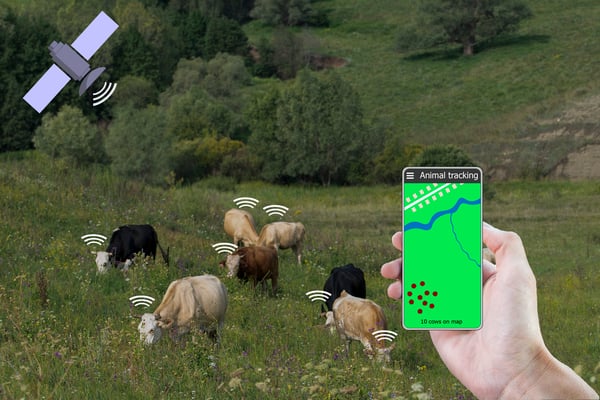
Precision Livestock Farming (PLF) technologies are becoming increasingly accessible and offer detailed, real-time insights for heat stress monitoring (5). Devices such as smart ear tags and rumen boluses equipped with temperature and activity sensors can detect deviations from normal patterns, enabling farmers to intervene before animal welfare and productivity are compromised. Smart collars can identify the precise location of animals, supporting virtual fencing systems and more efficient grazing management. Automated alerts linked to increased respiration rates or sudden reductions in rumination provide objective, data-driven information for timely decision-making.
These smart technologies offer a practical advantage for younger farmers and those managing larger herds.
Take-Home Message
Heat stress in pasture-based herds is predictable, measurable and largely preventable. The fundamentals are access to shade and water, and pasture management. Overlaying these with behavioural surveillance and, where appropriate, PLF technology coupled to meteorological data, gives interesting tools to act early and decisively.
References
-
Reis, N. S., Ferreira, I. C., Mazocco, L. A., Souza, A. C. B., Pinho, G. A. S., da Fonseca Neto, Á. M., Malaquias, J. V., Macena, F. A., Muller, A. G., Martins, C. F., Balbino, L. C., & McManus, C. M. (2021). Shade Modifies Behavioral and Physiological Responses of Low to Medium Production Dairy Cows at Pasture in an Integrated Crop-Livestock-Forest System. Animals : an open access journal from MDPI, 11(8), 2411. https://doi.org/10.3390/ani11082411
-
Slayi M and Jaja IF (2025) Strategies for mitigating heat stress and their effects on behavior, physiological indicators, and growth performance in communally managed feedlot cattle. Front. Vet. Sci. 12:1513368. doi: 10.3389/fvets.2025.1513368
-
Bica, G. S., Pinheiro Machado Filho, L. C., & Teixeira, D. L. (2021). Beef Cattle on Pasture Have Better Performance When Supplied With Water Trough Than Pond. Frontiers in veterinary science, 8, 616904. https://doi.org/10.3389/fvets.2021.616904
-
Byrnes, R.C., Eastburn, D.J., Tate, K.W. and Roche, L.M. (2018), A Global Meta-Analysis of Grazing Impacts on Soil Health Indicators. J. Environ. Qual., 47: 758-765. https://doi.org/10.2134/jeq2017.08.0313
-
Hassan-Vásquez, J. A., Maroto-Molina, F., & Guerrero-Ginel, J. E. (2022). GPS Tracking to Monitor the Spatiotemporal Dynamics of Cattle Behavior and Their Relationship with Feces Distribution. Animals, 12(18), 2383. https://doi.org/10.3390/ani12182383

Leave your comments here