


Introduction
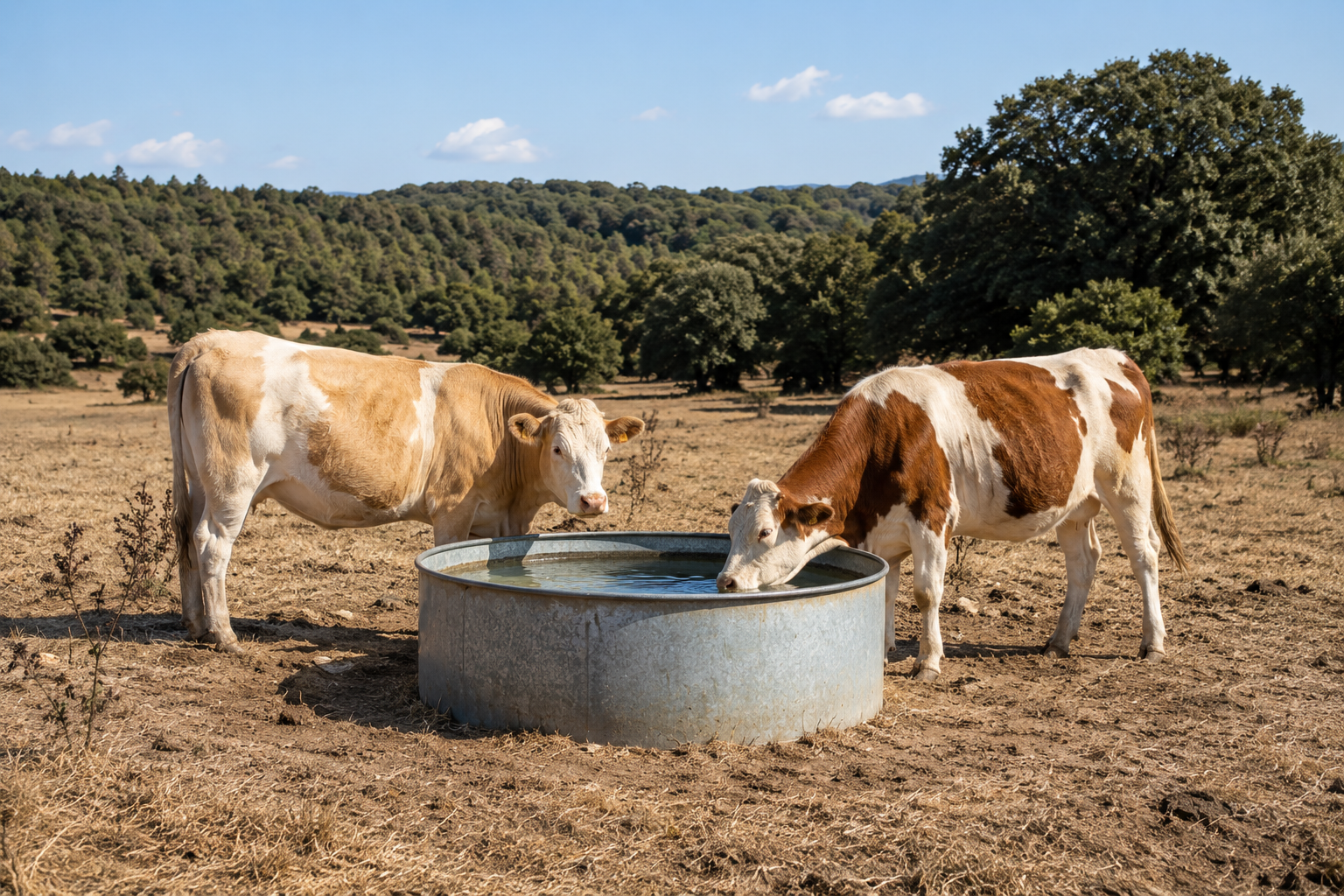
Cattle water consumption is one of the most important factors influencing feed intake, thermoregulation, grazing activity, and overall animal welfare and productivity [1]. In rotational grazing systems, water availability often influences how efficiently cattle use the pasture, and limited or poorly planned access to water may increase animal stress while contributing to uneven grazing patterns and soil degradation [2].
Efficient water distribution is a key component of successful rotational grazing systems, directly influencing cattle performance, pasture utilization, and overall grazing efficiency.
Prefer to listen to this article? Click the play button below and enjoy our podcast!
Why Is Water Distribution Important for Cattle Water Consumption in Rotational Grazing?
Water distribution has a direct impact on cattle movement, grazing behaviour, and forage utilization, so a strategic placement of watering points can improve pasture utilization and encourage cattle to graze a larger proportion of the paddock area [2].
Grazing behaviour is influenced not only by pasture structure, but also by environmental conditions and access to water [1]. Factors such as heat stress can affect both grazing activity and water consumption throughout the day, while adequate water availability and favourable grazing conditions support animal comfort and overall performance [1].
Poorly distributed water sources often lead cattle to gather around the same watering areas, increasing:
- Trampling pressure;
- Soil compaction;
- Nutrient accumulation [2,3].
Rotational grazing systems may further support a more uniform use of the grazing area, contributing to lower soil disturbance and improved water infiltration when compared with continuous grazing systems [3].
What Are the Best Water Sources for Supporting Cattle Water Consumption in Rotational Grazing?
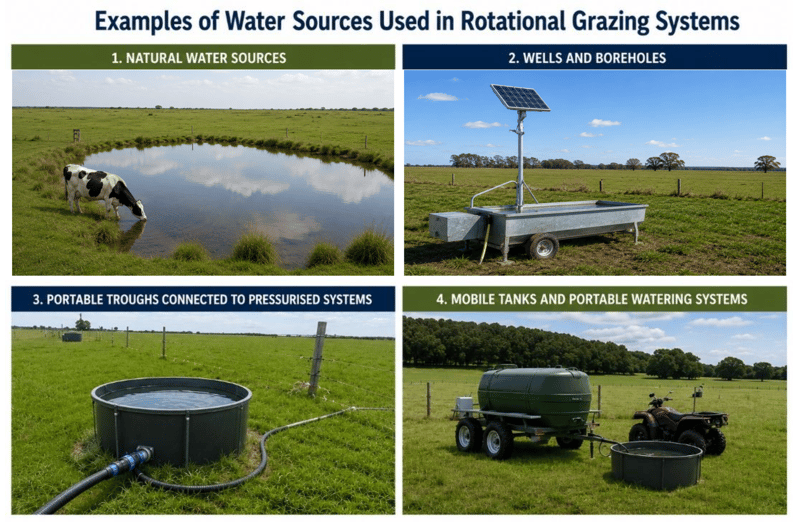
Rotational grazing systems may rely on different water sources depending on paddock design, available infrastructure, and environmental conditions. The most commonly used sources include:
- Natural water sources, such as ponds, streams, and springs, although these require proper management to maintain water quality.
- Wells and boreholes, commonly used to supply water to troughs connected to grazing areas [4,5].
- Portable troughs connected to pressurised systems, which provide greater flexibility when managing multiple paddocks [5].
- Mobile tanks and portable watering systems, particularly useful in temporary grazing areas or more flexible rotational setups [5].
Allowing unrestricted cattle access to natural water sources may increase the risk of bacterial contamination and excessive nutrient accumulation in areas with high animal concentration [4].
Strategic Placement of Water Points Within Paddocks
Water placement is an important component of rotational grazing management, as it influences both pasture use and cattle distribution within the grazing area [2]. The location of watering points interacts with factors such as shade availability, terrain, and forage distribution, all of which influence cattle movement and grazing behaviour [2]. In contrast, concentrating water access in a single area may encourage animal congregation and increase pressure on particular sections of the paddock [2].
Studies have shown that pasture utilization tends to decline when the distance to a watering point exceeds approximately 800–1,000 feet, particularly in steep terrain [5]. For this reason, keeping watering points within a reasonable distance of grazing areas generally promotes a more uniform use of the pasture.
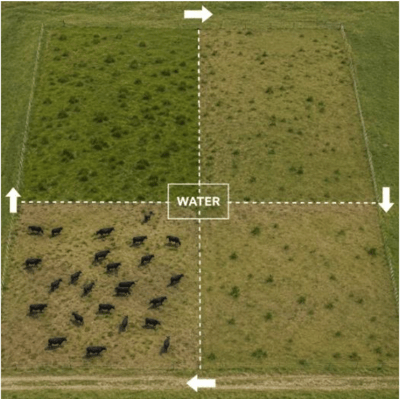
Well-positioned watering systems can therefore support a more balanced distribution of cattle across the grazing area and contribute to more even pasture utilization.
Which Water Delivery Systems Improve Cattle Water Consumption in Grazing Systems?
Different grazing systems may require different types of water infrastructure. The choice of infrastructure usually depends on paddock size, terrain, and the flexibility required within the grazing system.
Recent advances in digital livestock technologies are also contributing to more efficient grazing management. Monitoring tools, behavioural data, and precision farming systems may help producers evaluate animal movement, grazing activity, and water use more effectively in pasture-based systems [6].
Selecting the right water infrastructure is essential to ensure reliable water access throughout the grazing system. Common solutions include:
- Permanent water lines connected to multiple paddocks;
- Portable troughs linked through quick-coupler systems;
- Mobile tanks for temporary grazing areas;
- Gravity-fed tanks and solar-powered pumping systems for more remote locations [5].
Managing Water Quality for Cattle Performance
Maintaining good water quality is essential for both cattle health and overall productivity, since poor-quality water may reduce water intake and negatively affect animal performance [4].
Several management practices can help maintain clean and safe drinking water in grazing systems, including:
- regular cleaning of drinking troughs to reduce algae growth and bacterial contamination [4];
- protecting water sources from excessive contamination associated with manure accumulation and livestock activity [4];
- maintaining reliable water supply systems, adequate flow rates, and regular water renewal to ensure cattle have continuous access to clean and fresh drinking water [7].
Livestock water sources may be affected by nitrate and bacterial contamination associated with manure management and fertilizer use [4]. Elevated contaminant levels have been linked to reduced water intake, health issues, and lower milk production in cattle [4].
For this reason, regular cleaning of drinking troughs helps reduce contamination risks and maintain better water quality [4].
How Do Seasonal Conditions Influence Cattle Water Consumption?
Seasonal conditions can influence both water intake and grazing behaviour in pasture-based systems [1]. Throughout the year, changes in environmental conditions and thermal stress may affect how cattle move across the pasture, use available water sources, and their grazing behaviour [1]. Temperatures can also affect water availability, flow rates, and drinking behaviour, highlighting the importance of regular monitoring and maintenance of watering infrastructure throughout the grazing season [1,7].
In addition, seasonal changes in forage availability and pasture conditions may influence grazing distribution and paddock management decisions [1,6]. For this reason, effective water distribution remains an important component of rotational grazing systems, helping support animal performance, pasture utilization, and more sustainable grazing management practices.
Take-home message
- Water distribution is a key driver of grazing efficiency in rotational systems.
- Well-positioned water points improve cattle distribution and pasture utilisation.
- Excessive distance to water reduces grazing uniformity and increases pressure on preferred areas.
- Flexible water delivery systems enhance the adaptability of rotational grazing operations.
- Clean, fresh water is essential to support animal performance and welfare.
- Effective water management contributes to both productive and sustainable grazing systems.
References
[1] Barsotti, M. P., de Almeida, R. G., Macedo, M. C. M., Zawada, P., Werner, J., & Dickhoefer, U. (2024). Behavioural responses of beef cattle to different grazing systems and the influence of these responses on water productivity of livestock in a tropical savannah. Animal, 18, 101117. https://doi.org/10.1016/j.animal.2024.101117
[2] Rivero, M. J., Grau-Campanario, P., Mullan, S., Held, S. D. E., Stokes, J. E., Lee, M. R. F., & Cardenas, L. M. (2021). Factors Affecting Site Use Preference of Grazing Cattle Studied from 2000 to 2020 through GPS Tracking: A Review. Sensors, 21, 2696. https://doi.org/10.3390/s21082696
[3] Baronti, S., Ungaro, F., Maienza, A., Ugolini, F., Lagomarsino, A. E., Calzolari, C., Pisseri, F., Robbiati, G., & Vaccari, F. P. (2022). Rotational pasture management to increase the sustainability of mountain livestock farms in the Alpine region. Regional Environmental Change, 22, 50. https://doi.org/10.1007/s10113-022-01896-1
[4] Douglas, C., & Pandey, P. (2025). Nitrate and Bacterial Loads in Dairy Cattle Drinking Water and Potential Treatment Options for Pollutants—A Review. Applied Sciences, 15, 3017. https://doi.org/10.3390/app15063017
[5] Booher, M., & Clark, B. Using Temporary Watering and Fencing in a Rotational Grazing System. Virginia Cooperative Extension, SPES-710P.
[6] Marchegiani, S., Gislon, G., Marino, R., Caroprese, M., Albenzio, M., Pinchak, W. E., Carstens, G. E., Ledda, L., Trombetta, M. F., Sandrucci, A., Pasquini, M., Deligios, P. A., & Ceccobelli, S. (2025). Smart technologies for sustainable pasture-based ruminant systems: A review. Smart Agricultural Technology, 10, 100789. https://doi.org/10.1016/j.atech.2025.100789

Leave your comments here