


Introduction
Dairy cow nutrition is fundamental for productive, profitable, and sustainable milk production, supporting not only yield but also reproduction, immunity, welfare, and longevity. Modern feeding strategies must therefore go beyond basic nutrient supply and focus on metabolic adaptation, particularly during critical stages such as the transition period1.
Feed intake is a central determinant of nutritional status, as it mediates the balance between nutrient supply and physiological demand. It is influenced by physiological, dietary, and management factors and is regulated by metabolic status and physiological signals. Accurate monitoring of intake dynamics is therefore essential for precision nutrition strategies in dairy production2.
Prefer to listen to this article? Click the play button below and enjoy our podcast!
How should dairy cow nutrition change by lactation stage?
Dairy cow nutrition should change according to lactation stage because energy demand, dry matter intake, mineral needs, and body condition targets vary throughout the cycle. Transition cows need metabolic support, early-lactation cows need energy-dense diets, and later stages require body condition management.
Transition Period (3 weeks pre- and post-calving)
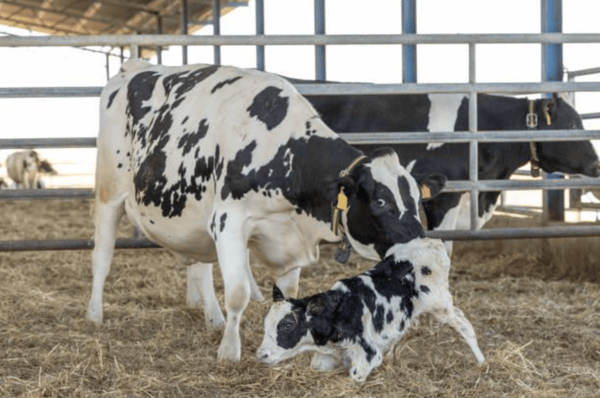
A severe Negative Energy Balance (NEB) characterizes this phase, where energy demand exceeds intake, leading to mobilization of body fat reserves. This increases plasma non-esterified fatty acids and hepatic ketogenesis, raising the risk of ketosis and fatty liver1.
Nutritional strategies should aim to increase dietary energy density while maintaining adequate physically effective fibre to support rumen function. This is commonly achieved through the inclusion of highly digestible forages and concentrates. Mineral balance is also critical, particularly the dietary cation-anion difference (DCAD), as negative DCAD diets fed prepartum are associated with improved calcium homeostasis and may reduce the incidence of both clinical and subclinical hypocalcemia at calving3.
Early Lactation (0–70 days in milk)
Milk production increases rapidly after calving, while dry matter intake rises more slowly, resulting in peak NEB. Although intake gradually improves, cows often remain in mild NEB due to high energy demands1, making this a key period for supporting both productivity and cow health.
Dietary management should focus on encouraging adequate intake, providing energy-dense feeds, and maintaining rumen stability. Ruminal pH and fermentation balance are essential to prevent subacute ruminal acidosis (SARA), particularly in high-starch diets. Physically effective fibre supports rumination and stabilizes rumen function4.
Mid Lactation (70–200 days)
Milk production stabilizes or declines, and energy balance improves, allowing recovery of body condition. Diet formulation becomes more flexible.
The main focus is maintaining an adequate energy-to-protein ratio and preventing excessive body condition gain, which increases the risk of metabolic disorders in the subsequent transition period1.
Late Lactation and Dry Period
Milk yield declines and nutritional priorities shift toward restoring body reserves and preparing for the next lactation cycle. Proper nutritional management during this phase is essential to ensure metabolic stability and reduce postpartum disease risk in the next lactation4. The link between late lactation nutrition and health outcomes is mainly mediated through its impact on body condition entering the transition period.
What practical feeding practices support dairy cow nutrition on farms?
Key farm-level practices include:
- Uniform Total Mixed Ration mixing
- Regular forage analysis (NDF, ADF, DM, digestibility)
- Ensuring constant access to clean, high-quality water
- Proper feed bunk management and space allocation
- Body Condition Score monitoring
- Rumen health evaluation
- Adjustment of mineral and vitamin premixes
- Group-based monitoring of feed intake
Changes in feeding behaviour and rumination patterns can be used as indicators of metabolic status and herd health, supporting practical on-farm decision-making and herd management strategies.
How can dairy cow nutrition improve sustainability?
Sustainable dairy nutrition aims to reduce environmental impact while maintaining productivity and animal welfare with a focus on mitigating enteric methane emissions. Selective breeding for feed efficiency and low-methane-emitting animals represents a promising long-term strategy, as both traits are heritable and linked to the ruminal microbiome5.
Dietary interventions including improved forage quality, lipid supplementation, and methane inhibitors like 3-NOP can further reduce methane production. The effectiveness of mitigation strategies is evaluated based on methane yield, intensity, and total emissions, highlighting the importance of integrated genetic, nutritional, and management approaches to reduce environmental impact5.
Take Home Messages
Dairy cow nutrition is a dynamic system that must be adapted to physiological stage, metabolic status, and welfare needs. By combining scientific knowledge with practical feeding strategies, it is possible to improve animal health, enhance productivity, and promote sustainability. The NASEM (2021) framework emphasizes predictive and adaptive nutrition models, integrating intake capacity, diet composition, and physiological status. The future of dairy nutrition lies in combining these models with real-time data from sensors monitoring rumination, activity, and feeding behaviour, enabling more precise and responsive management that benefits both herd performance and cow wellbeing.
References
[1] Kerwin AL, Burhans WS, Nydam DV, Overton TR. Transition cow nutrition and management strategies of dairy herds in the northeastern United States: associations of management and dietary factors with health, milk yield, and reproduction. Journal of Dairy Science; 2022; 106(2):1246-1266.
[2] Mann S. Symposium review: The role of adipose tissue in transition dairy cows: Current knowledge and future opportunities. Journal of Dairy Science; 2022; 105(4):3687-3701.
[3] National Academies of Sciences, Engineering, and Medicine. 2021. Nutrient Requirements of Dairy Cattle: Eighth Revised Edition. Washington, DC: The National Academies Press.
[4] Plaizier JC, Mulligan FJ, Neville EW, Guan LL, Steele MA, Penner GB. Effect of subacute ruminal acidosis on gut health of dairy cows. Journal of Dairy Science; 2022; 105(9):7141-7160.
[5] Arndt C, Hristov AN, Price WJ, McClelland SC, Pelaez AM, Cueva SF, Oh J, Dijkstra J, Bannink A, Bayat AR, Crompton LA, Eugene MA, Enahoro D, Kebreab E, Kreuzer M, McGee M, Martin C, Newbold CJ, Reynolds CK, Schwarm A, Shingfield KJ, Veneman JB, Yanez-Ruiz DR, Yu ZT. Full adoption of the most effective strategies to mitigate methane emissions by ruminants can help meet the 1.5 degrees C target by 2030 but not 2050. Proceedings of the National Academy of Sciences of the United States of America. 2022; 119(20):e2111294119.

Leave your comments here