


Introduction
Well-balanced and efficient nutrition is one of the main drivers of cattle health, welfare, performance, profitability, and sustainability in beef production systems.
As feed costs represent the largest variable expense on most farms, producers increasingly rely on scientific approaches to optimise feeding strategies.
Modern cattle feed formulation has evolved beyond balancing nutrients and now integrates rumen health, animal performance, economic efficiency, and environmental sustainability.
Prefer to listen to this article? Click the play button below and enjoy our podcast!
What makes cattle feed formulation more than balancing nutrients?
Cattle feed formulation is a complex optimisation process that aims to identify the best combination of feed ingredients to meet animal nutrient requirements while supporting health, productive performance and economic efficiency1. Because feed represents the largest variable cost in beef production systems, production costs play a central role in defining feeding strategies.
Rather than focusing solely on the lowest-cost diet, modern formulations seek to balance multiple objectives, including growth performance, feed conversion ratio (FCR), profitability, and environmental impact.
Most commercial feed formulation software relies on nutrient requirement systems developed by the National Academies of Sciences, Engineering, and Medicine (NASEM), which provide evidence-based recommendations according to physiological stage and production goals. Accurate assessment of nutrient requirements is fundamental to developing effective feeding strategies and supporting animal performance and production efficiency. However, animal responses remain dynamic and influenced by factors such as nutrient bioavailability, rumen function, genetics, and management conditions. Therefore, successful cattle feed formulation requires both predictive models and professional expertise.

How is a finishing ration for beef cattle formulated?
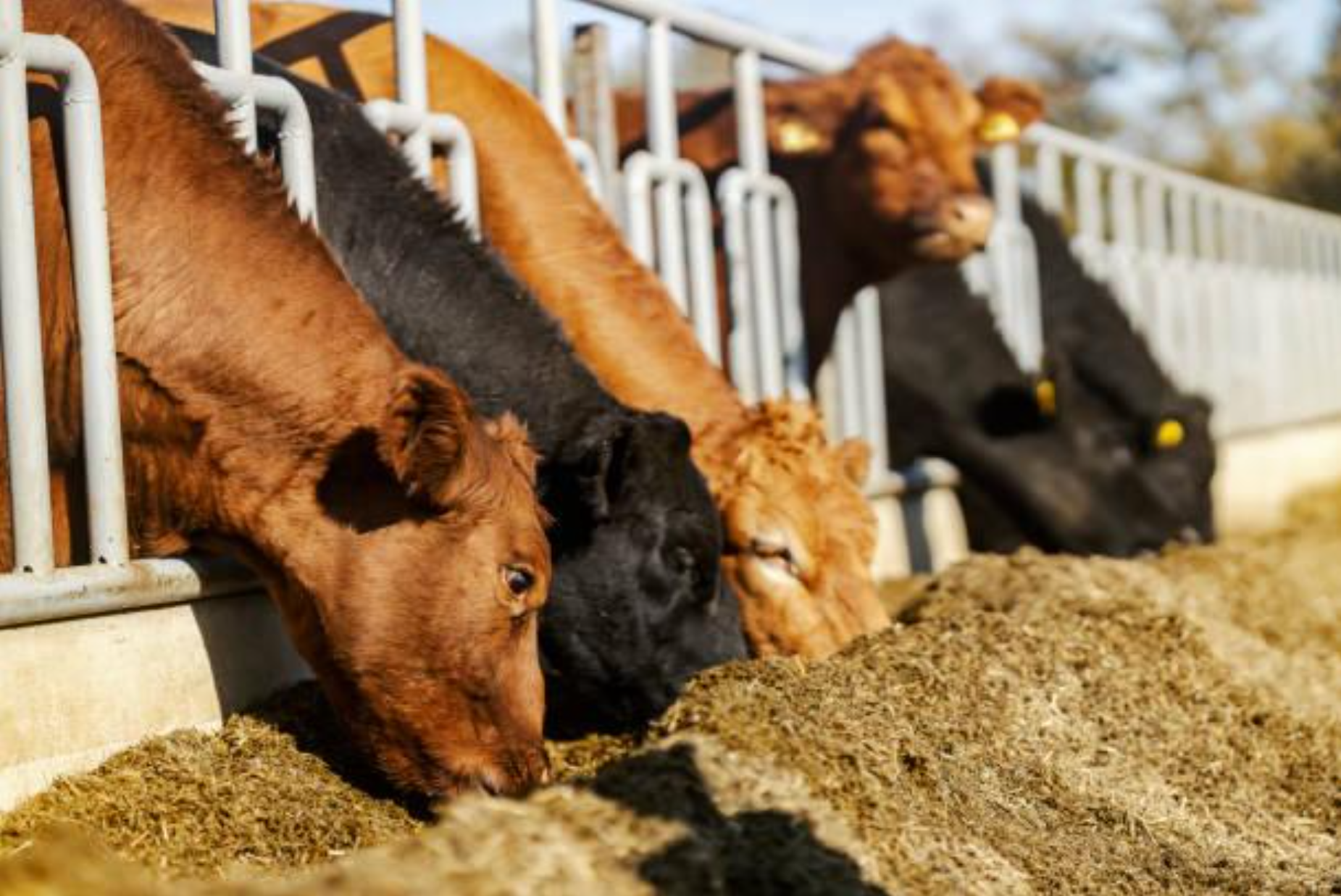
The primary objective of a finishing ration for beef cattle is to support growth performance while maintaining rumen health. As cattle approach market weight, dietary energy density is progressively increased to improve performance and feed efficiency.
However, increasing dietary concentrate levels also increases the risk of subacute ruminal acidosis (SARA), one of the most important nutritional disorders affecting feedlot cattle. Consequently, modern beef cattle nutrition aims to balance performance with digestive health and animal welfare.
An effective finishing ration for beef cattle should balance:
- Energy density
- Protein supply
- Physically effective fibre
- Mineral and vitamin supplementation
- Rumen health
- Production objectives
Adequate fibre intake supports chewing activity, ruminal buffering, and fermentation stability, helping maintain animal health while sustaining productive performance.
Why isn't feed formulation software enough to optimise cattle diets?
Modern feed formulation software enables nutritionists to formulate diets rapidly using nutritional models and optimisation algorithms. These tools provide valuable support for evaluating nutrient supply, ingredient combinations, and production costs.
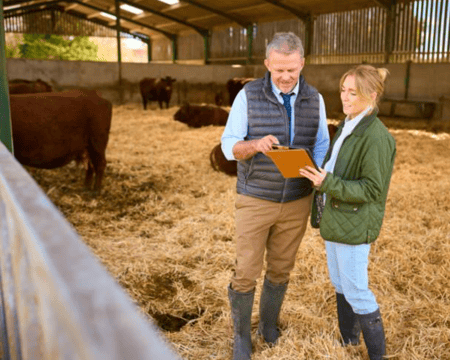
However, software outputs depend on biological assumptions that cannot fully account for variation in feed quality, nutrient digestibility, mineral interactions, animal health, and management conditions. As a result, feed formulation software should be considered a decision-support tool rather than a replacement for nutritional expertise.
What is the future of cattle feed formulation?
The future of cattle feed formulation lies in precision nutrition and data-driven decision-making. Improvements in FCR and average daily gain (ADG) increasingly rely on integrating nutritional management with genetics, health, and animal behaviour.
Emerging technologies such as artificial intelligence, optimisation algorithms, precision feeding systems, and rumen metagenomics are transforming nutritional management. In addition, sensor-based monitoring systems enable continuous assessment of animal behaviour, feed intake, and physiological responses, creating opportunities for more personalised and adaptive feeding strategies.
These advances are expected to support animal health and welfare, improve production efficiency, and contribute to more sustainable beef production systems.
Take Home Messages
Successful cattle feed formulation is no longer defined by the cheapest diet or the highest energy concentration but by the ability to balance animal performance, rumen health, welfare, profitability, and sustainability. As precision technologies continue to evolve, integrating science, data, and nutritional expertise will be essential to optimise beef production systems.

References
- Marques JGO, Silva RO, Barioni LG, Hall JAJ, Tedeschi LO, Moran D. An improved algorithm for solving profit-maximizing cattle diet problems. Animal. 2020;14(S2):S257–S266. doi:10.1017/S1751731120001433.
- Uribe-Guerra GD, Múnera-Ramírez DA, Arias-Londoño JD. Feed formulation using multi-objective Bayesian optimization. Computers and Electronics in Agriculture. 2024;224:109173. doi:10.1016/j.compag.2024.109173.
- Akintan O, Gebremedhin KG, Uyeh DD. Animal Feed Formulation—Connecting Technologies to Build a Resilient and Sustainable System. Animals. 2024;14(10):1497. doi:10.3390/ani14101497.
- National Academies of Sciences, Engineering, and Medicine (NASEM). Nutrient Requirements of Beef Cattle. 8th revised ed. Washington, DC: National Academies Press; 2016.
- Weiss WP, Hansen SL. Invited review: Limitations to current mineral requirement systems for cattle and potential improvements. Journal of Dairy Science. 2024;107(12):10099–10114. doi:10.3168/jds.2024-25150.
- Coon RE, Tucker CB. Cattle are more motivated for a high-concentrate diet than Sudan grass hay, despite low reticulorumen pH. Journal of Animal Science. 2024;102:skae049. https://doi.org/10.1093/jas/skae049
- Kenny DA, Fitzsimons C, Waters SM, McGee M. Invited review: Improving feed efficiency of beef cattle – the current state of the art and future challenges. Animal. 2018;12(9):1815–1826. doi:10.1017/S1751731118000976.
- Saez-Torillo SN, Danielsson R, Nguyen TQN, Lima PDJG, Cleveland MA, Roehe R, Martínez-Álvaro M. Predicting beef diet nutritional composition and intake from rumen metagenomic profiles. Animal Nutrition. 2026;25:297–309. doi:10.1016/j.aninu.2025.10.005.
- Shafi FB, Ahamed MF, Nabi MF, Khandakar A, Rohouma W, Ayari MA, Thomas K, Rahman A, Reaz MBI, Haq F, Refaat SS. Review of sensor technologies, DC-DC converters, and power electronics for sustainable monitoring in precision livestock farming. Results in Engineering. 2025;28:107975. doi:10.1016/j.rineng.2025.107975.

Leave your comments here