


Calf respiratory disease is one of the most common health challenges encountered by cattle producers. While prevention is always preferable to treatment, implementing effective preventive strategies is complex. Calves are exposed to a wide range of pathogens, while numerous risk factors continuously influence disease susceptibility during the first six months of life.
Some risk factors can be anticipated and controlled; others are much harder to predict.
We can define 5 key surveillance points. If these five areas are under control, the risk of BRD is dramatically reduced.
Prefer to listen to this article? Click the play button below and enjoy our podcast!
1. How Does Transfer of Passive Immunity Affect Calf Respiratory Disease Risk?
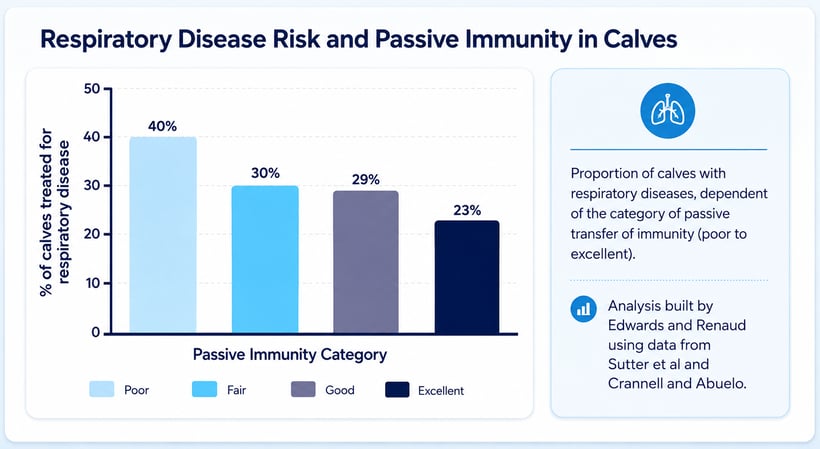
Successful transfer of passive immunity helps protect calves against respiratory disease during the first weeks of life.
Colostrum provides IgG and other immune factors: adequate colostrum intake supplies antibodies, immune cells, cytokines, and other bioactive compounds that help neutralize pathogens and support immune system development.
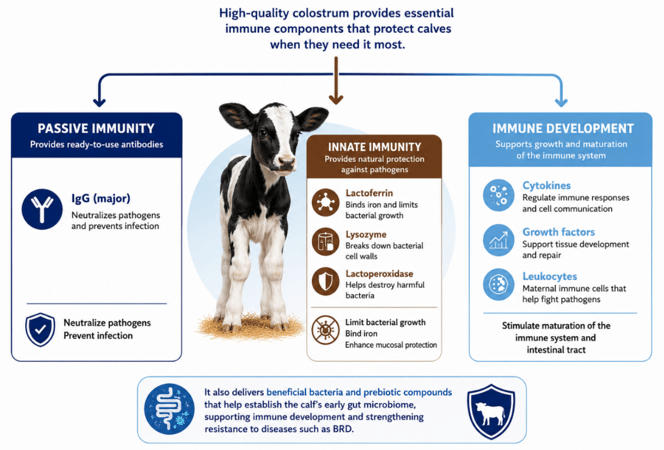
AI-generated illustration
Better colostrum management today means fewer BRD cases tomorrow. Successful passive immunity transfer is the foundation of any respiratory disease prevention strategy.
2. How Can You Reduce Pathogen Pressure to Prevent BRD in Calves?
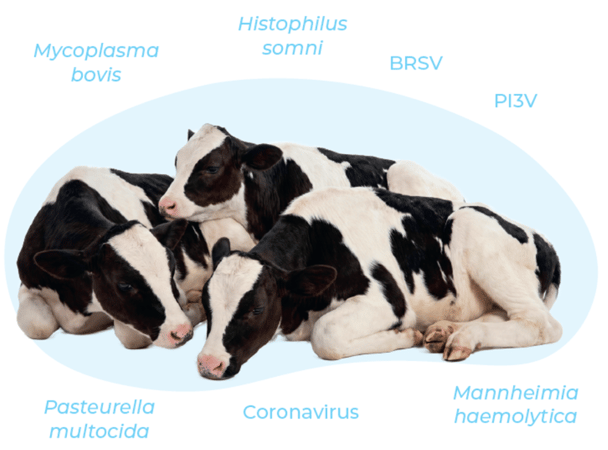
Every farm has its own BRD ecosystem. The pathogens involved can vary between herds, and many of the key BRD agents are carried by clinically healthy animals. Adult cattle often act as asymptomatic reservoirs, harboring respiratory pathogens in the upper respiratory tract and contributing to their circulation within the herd.
Complete avoidance is unrealistic, but every measure that limits pathogen circulation and transmission helps calves stay healthier and more resilient.
- Vaccinate early against the major viral and bacterial pathogens involved in BRD.
- Prepare the calf's immune system before periods of increased risk. By reducing pathogen replication, pathogen shedding, and disease severity, vaccination contributes to lower BRD incidence and improved herd health.
- Maintain clean feeding equipment and housing environments.
- Effective biosecurity helps reduce the introduction, circulation, and transmission of BRD pathogens within and between groups of calves. Key measures include controlling animal mixing and introductions, isolating sick animals, maintaining good hygiene, and managing visitor access.
3. How Does Stress Increase the Risk of Respiratory Disease in Calves?
Stress does not cause BRD alone, but it creates conditions that allow pathogens to gain the upper hand.
Stress triggers physiological and hormonal changes, notably increased cortisol secretion, which can suppress immune function and make calves more vulnerable to respiratory disease. Pathogens normally confined to the upper respiratory tract multiply and migrate into the lower respiratory tract, where they can trigger pneumonia.
Attention should be paid to predictable stressors such as:
- Grouping
- Disbudding/dehorning
- Transportation
- Weaning, feed transitions
- Changes in groups/housing conditions
- Castration
These events can often be anticipated and managed through timing, preparation, and preventive measures. Minimizing the intensity and cumulative effect of stress helps reduce the risk of respiratory disease.
How Can BRD Be Detected Early During High-Risk Periods?
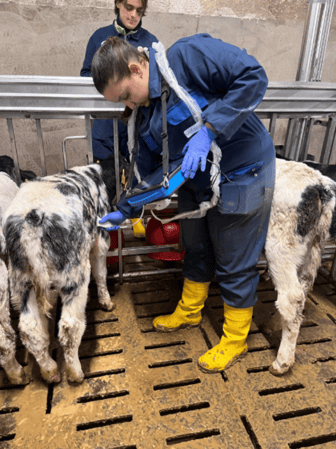
Closer monitoring during high-risk periods can help identify respiratory disease before severe clinical signs develop. Behavioral monitoring and lung ultrasonography can support earlier detection and more timely intervention.
High-risk periods require heightened vigilance. Increased monitoring allows farmers and veterinarians to identify affected calves at the earliest stages of disease, when treatment is most likely to be successful. Behavioral monitoring tools, including accelerometer-based sensors, can provide early warning of changes in activity, feeding, or resting patterns. Lung ultrasonography further strengthens disease surveillance by detecting respiratory lesions before severe clinical signs develop, supporting timely intervention and improved health outcomes.
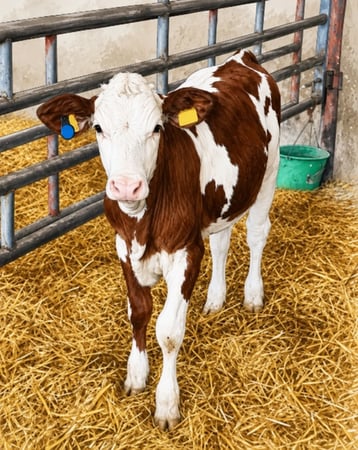 AI-generated image illustrating the approximate size and placement of the sensor on the animal’s ear.
4. What Housing Conditions Help Prevent Calf Respiratory Disease?
House calves in a dedicated environment designed to promote respiratory health, while avoiding overcrowding and drafts.
Housing conditions play a critical role in BRD prevention. Calves should be kept in a clean, dry, well-ventilated area with adequate allowance of space and good air quality. Proper ventilation helps remove moisture, dust, airborne pathogens, and noxious gases, while avoiding direct air drafts that can chill calves and increase respiratory stress. Overcrowding should be avoided, as it increases pathogen transmission and creates a less favorable environment for lung health. Maintaining comfortable bedding, appropriate temperature, and age-homogeneous groups further contributes to reducing disease pressure.
No antibiotic can compensate for poor housing conditions. A calf exposed to drafts is unlikely to recover fully, regardless of treatment.
5. How Does Nutrition Help Protect Calves Against Respiratory Disease?
Nutrition is a key pillar of BRD prevention, starting with the dry cow and continuing throughout calf rearing. Proper nutrition supports colostrum quality, immune function, growth, and the calf's ability to withstand respiratory challenges.
A well-fed calf is not only growing faster: it is also better equipped to respond to stress, vaccination, and respiratory pathogens.
Adequate energy intake (carbohydrates, fats) is essential because immune responses are highly energy demanding. Functional fatty acids (especially omega-3 fatty acids) help regulate inflammation and support immune responses.
High-quality milk proteins and essential amino acids (lysine, methionine, threonine) are required for antibody production, immune cell function, and tissue repair.
Vitamins A, D, E addition to ration is key to maintain respiratory and intestinal mucosal integrity, support and modulate innate and adaptive immunities.
Selenium works synergistically with vitamin E, enhances antioxidant defenses and immune function. Zinc, copper and iron also play a role in defenses against infections.
Finally, water is often the forgotten nutrient, yet it is essential for an effective immune response and respiratory health in calves. Dehydration can impair immune cell activity and reduce the calf's ability to respond to pathogens. Water stimulates feed intake and rumen development, supports mucosal defenses, is required during fever and inflammation. Water should never be considered optional because calves receive milk.
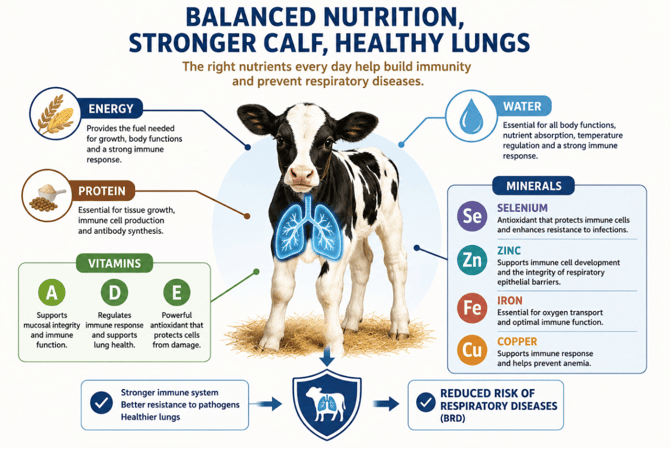
AI-generated illustration
Take-home messages
Effective BRD prevention combines strong passive immunity, reduced pathogen exposure, minimal stress, appropriate housing, balanced nutrition, and close surveillance. When disease does occur, early detection and intervention can help limit its impact on calf health.
Prevent what you can manage
- Prepare the dry cow properly
- Ensure early and adequate colostrum intake
- Provide balanced calf nutrition and appropriate vaccination
- Manage nutritional transitions carefully
- Maintain a clean, dry and well-ventilated environment
- Control group size, stocking density, group composition and changes
Keep stress to a minimum
- Avoid unnecessary stressors and ensure smooth transitions and consistent management.
- Avoid the association of stressful events (e.g., disbudding and vaccination).
- Prevent pain whenever necessary (e.g., during disbudding).
Increase surveillance during high-risk periods
- Know when calves are most at risk and monitor them closely.
- Early detection allows you to act before an outbreak occurs.
Act at the first signs of disease
- Identify and treat sick calves promptly.
- The earlier respiratory disease is detected and managed, the greater the chance of preventing lung damage and preserving lung function.
References
Edwards, K.Y.; Renaud, D.L.: A Framework for Comprehensive Dairy Calf Health Investigations. Animals 2025, 15, 181.
Sutter et al.: Association between transfer of passive immunity, health, and performance of female dairy calves from birth to weaning. J. Dairy Sci. 2023, 106, 7043–7055.
Crannell, P.; Abuelo, A.: Comparison of calf morbidity, mortality, and future performance across categories of passive immunity: A retrospective cohort study in a dairy herd. J. Dairy Sci. 2023, 106, 2729–2738.
Storoni C. et al: Bacterial Bovine Respiratory Disease: A Comprehensive Review of Etiology, Pathogenesis and Management Strategies. Microbiology Research. 2026; 17(1):18.
O'Donoghue S. et al: A Comprehensive Review: Bovine Respiratory Disease, Current Insights into Epidemiology, Diagnostic Challenges, and Vaccination. Vet Sci. 2025 Aug 20;12(8):778.
Nicola I. et al: Identification of Risk Factors Associated with Treatment for BRD in Beef Calves Within the First 60 Days After Arrival at Fattening Operations in Northwestern Italy Beef Calves. Vet Sci. 2025 Sep 16;12(9):898.
Adekunle A. et al: Mapping Variability in Bovine Respiratory Disease Risk Factors in Beef Production Systems: A Scoping Review. Animals. 2026; 16(11):1726.
Kesler K.W. and Abuelo A.: Zinc about it – zinc and calf immunity. Front. Immunol.2024, 15:1387950.
Palomares R.A.: Trace Minerals Supplementation with Great Impact on Beef Cattle Immunity and Health. Animals. 2022; 12(20):2839.
Vlasova A.N. and Saif L.J.: Bovine Immunology: Implications for Dairy Cattle. Front. Immunol., 2021,12:643206.

Leave your comments here